
Why APAC Requires a Different Go-To-Market Strategy for Ad Tech Companies
Asia Pacific continues to be one of the most attractive growth regions for digital advertising and ad technology businesses.
Driven by rapid digital adoption, mobile-first consumer behavior and expanding programmatic ecosystems, the region is expected to remain a major contributor to global advertising growth over the coming years. According to Grand View Research, the Asia Pacific digital advertising market is forecast to grow at a CAGR of approximately 17% through 2030, with video, mobile and programmatic advertising continuing to drive expansion.
At the same time, Southeast Asia alone is projected to experience double-digit advertising growth across multiple markets, fueled by increasing internet penetration, e-commerce growth and mobile consumption.
Yet despite the opportunity, many ad tech companies underestimate how different APAC is from Europe or North America.
Expanding successfully into Asia Pacific requires far more than simply opening a regional office or hiring a salesperson in Singapore. The region is fragmented, relationship-driven and commercially diverse, with each market operating differently in terms of buying structures, agency ecosystems, publisher relationships and business culture.
APAC Is Not One Market
One of the most common mistakes businesses make is treating APAC as a single region.
In reality, Asia Pacific is a collection of highly diverse markets that operate independently in many ways. Japan behaves very differently from Southeast Asia. India has entirely different commercial dynamics compared to Australia. South Korea has its own local platform ecosystem, while Southeast Asia itself consists of multiple fast-growing but highly fragmented markets.
Even neighboring countries often differ significantly in:
media maturity,
procurement structures,
advertiser expectations,
agency influence,
and partnership dynamics.
Singapore is commonly used as the regional hub for APAC expansion, but success in Singapore does not automatically translate into success across the broader region.
This complexity is one of the reasons many global “playbooks” struggle when applied directly to Asia Pacific.
Mobile-First Behavior Is Reshaping the Region
One of the defining characteristics of APAC is its mobile-first digital environment.
Across many Asian markets, smartphones are not simply the primary screen - they are often the only screen consumers regularly use to access digital content, social platforms, e-commerce and entertainment.
According to Campaign Asia, mobile devices continue to drive much of APAC’s digital advertising growth, while social and video formats remain dominant across many markets.
This has major implications for:
advertising formats,
audience engagement,
creative strategy,
and media buying behavior.
Businesses entering APAC need to understand that consumer behavior across the region is often fundamentally different from Western markets.
Relationship Building Still Matters
While automation and programmatic technology continue to evolve rapidly, APAC remains highly relationship-driven.
Strong agency, publisher and partner relationships still play an important role in:
business development,
strategic introductions,
ecosystem trust,
and long-term commercial growth.
This is especially true in markets such as Japan, Thailand and Indonesia, where local relationships and commercial credibility can significantly influence market adoption.
Companies that attempt to manage APAC entirely remotely often struggle to build momentum. In many cases, businesses underestimate the importance of local responsiveness, regional understanding and ongoing partner engagement.
Technology alone is rarely enough.
Regional Strategy Requires Local Adaptation
Localization in APAC goes far beyond translating sales decks or adapting creatives.
Successful businesses localize:
commercial strategy,
pricing structures,
partnership models,
communication styles,
and go-to-market execution.
For example, the expectations of advertisers and agencies in Australia may differ significantly from those in India or Southeast Asia. Procurement timelines, decision-making structures and even definitions of “premium inventory” can vary widely between markets.
This is one of the reasons why highly centralized global expansion strategies often face challenges in Asia Pacific. The companies that perform best in APAC are typically those that combine:
regional strategic vision,
local market understanding,
and flexible commercial execution.
Growth Opportunities Remain Significant
Despite the complexity, APAC remains one of the most dynamic digital advertising regions globally.
According to Dentsu APAC Ad Spend Report 2025, the region continues to outperform many global markets in digital advertising growth, driven by mobile adoption, social media consumption, video advertising and retail media expansion.
India alone is forecast to become one of the world’s fastest-growing digital advertising markets over the coming years, while Southeast Asia continues to experience strong growth in:
e-commerce,
connected TV,
mobile video,
and programmatic advertising.
For ad tech and digital media companies, the long-term opportunity remains substantial.
Asia Pacific Digital Advertising Market Growth Forecast
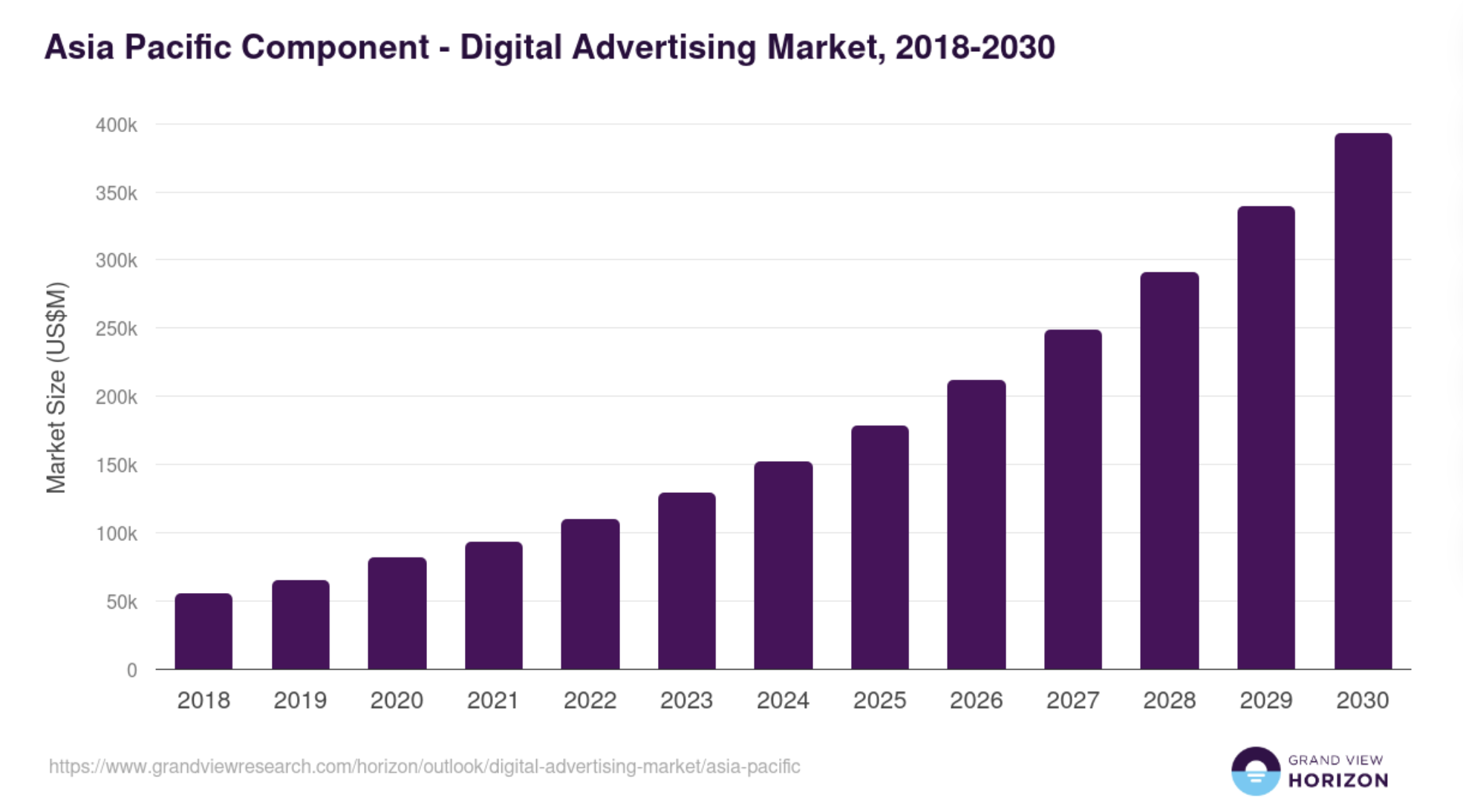
The Asia Pacific digital advertising market generated a revenue of USD 151,723.2 million in 2024.
The market is expected to grow at a CAGR of 17% from 2025 to 2030.
In terms of segment, smartphone was the largest revenue generating component in 2024.
Smartphone is the most lucrative component segment registering the fastest growth during the forecast period.
Country-wise, Australia is expected to register the highest CAGR from 2025 to 2030.
Source: Grand View Research
Southeast Asia Advertising Market Forecast
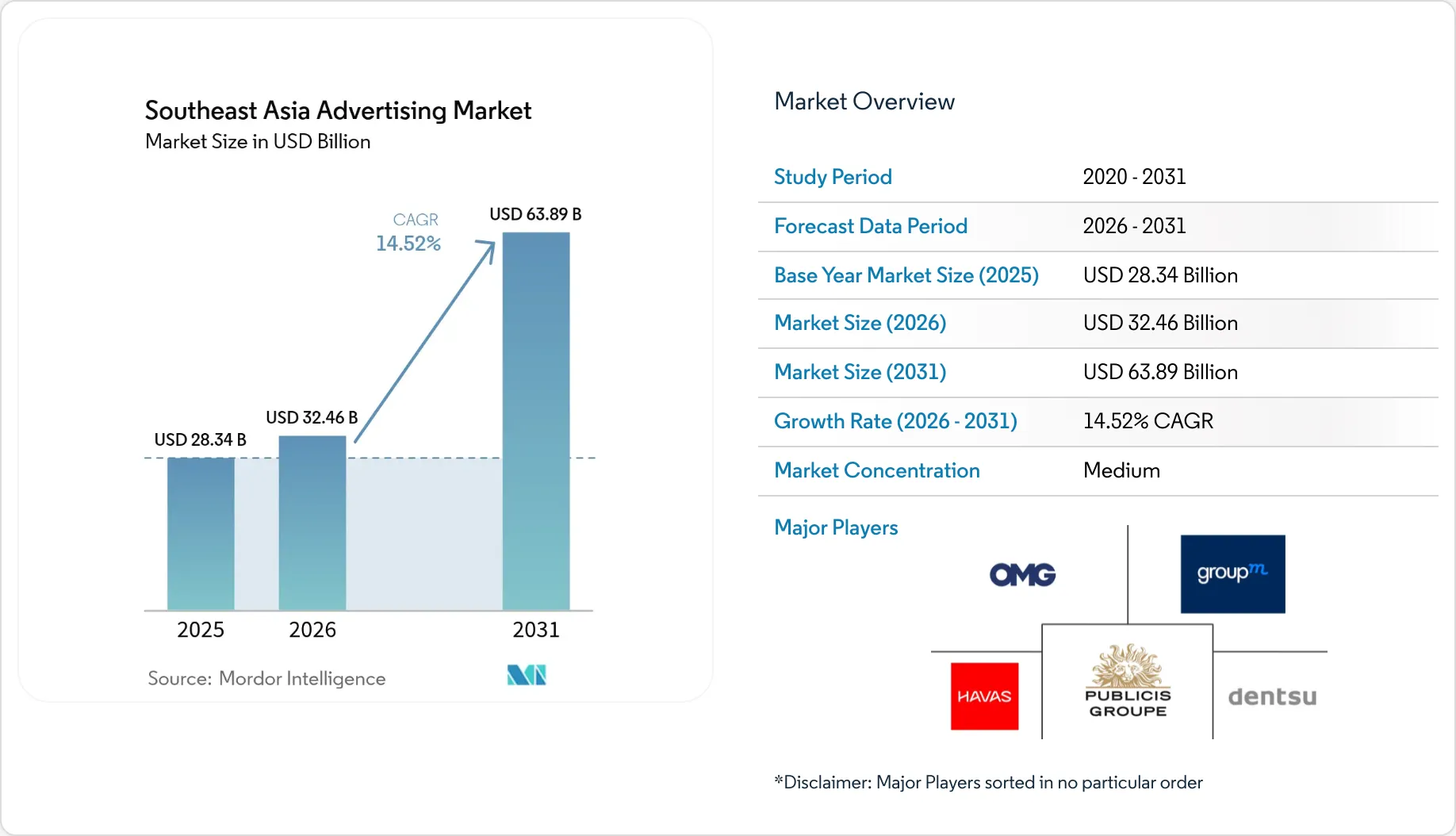
2025: USD 28.3B
2031: USD 63.9B
CAGR: 14.5%
Source: Mordor Intelligence
Final Thoughts
Expanding into APAC requires patience, adaptability and local expertise. Businesses that succeed in the region are typically those that:
understand local market dynamics,
invest in relationships,
adapt their commercial strategy,
and establish strong regional support structures.
Asia Pacific is not a single market, and that is precisely what makes it both challenging and highly valuable. For companies willing to invest in regional understanding and long-term partnerships, APAC continues to represent one of the most compelling growth opportunities in global digital advertising.
